
35 years ago, last week, my parents deposited me on a beautiful campus in rural southwestern Michigan, at a small Christian university for my freshman college orientation.
I didn’t want to be there.
Most of the Black students from my high school were going to HBCUs (and had also gone in from the class that graduated before ours). I was beyond salty that I wasn’t going to be in Atlanta or Washington D.C. with them. Truth be told, I’m still mad about it.
My mother felt that at 16, I was too young to be on my own in a major city. My logic of having been born and raised in the largest city in the US, fell on deaf ears.
This was the first time I started a new school as the same time as others. I was usually a transfer student, perpetually the new girl. Combined with being an only child, I always felt awkward and like I never truly belonged.
So in July 1989, I was finally on level footing with others who were also having this new life experience. We were mostly all of the same age and religious denomination. We then naturally gravitated to smaller groups with students we knew and recognized from our home cities or who might have the same heritage (big up the Jamaican massive).
This was my community. For a time. Michigan winters got old really fast and I was up and outta there halfway through my sophomore year. I made myself the new girl again! Arrrrrrgggghhh!
Throughout the years, the concept of community has become even more so important to me. Looking for and securing a tribe. (Siri, play Glenn Jones I’ve Been Searchin.)
Then came social media.
I thought this was an opportunity for everyone to be on the same footing. Initially, I looked at Facebook as a great communications tool to bring people closer together. It was perfect as I’d recently moved across country from family and friends and changed time zones three times in five years for work. Communicating is literally how I pay my bills, so I saw the vision immediately.
Before “content creation” was a more widely known and used term, I made a plan for how I would post. I would share news and my commentary in the morning to provide information people could learn from and hopefully engender interesting conversation. Then, something funny around lunch time to give everyone a break. I never did it with the intention to monetize my content, try to become popular or go viral. As a matter of fact, I would go out of my way to not have that happen. If something would resonate with a lot of people, I’d get requests to make it public, so it could be shared. I would usually say “no”. All I wanted to do, was to get closer to the people I already knew to strengthen my community.
I was also invested in everyone else’s lives, seeing the joy of the dating, engagements, marriages, new homes, new jobs, babies, grand babies!, first steps, first day of schools but also being there to share and grieve in illnesses, divorces and deaths.
But in many instances, it was only building parasocial relationships.
Once, I was at a small jazz club in Manhattan for a concert. I posted about it while I was there, then later saw a comment on that post which said, “I saw you, I was sitting right behind you”. I’m pretty sure I asked, “why didn’t you say something?” I don’t remember the response. We “talked” and joked on Facebook all day long, but when I was actually in front of them in person, they don’t say anything? And a version of that happened often.
Then, the 2016 US presidential election revealed things about some people I called my friends and I realized that we’d never asked each other – Who are you? What do you believe in? Why do you believe that? What’s important to you?
Us laughing when we worked together from 2003-2006 or took English Lit in the 11th grade isn’t quite the tie that binds. Finding out some were going to vote for a candidate who explicitly threatened my humanity or those I cared about was eye-opening and depressing.
So last year, after 15 years, I deactivated that account and my LinkedIn profile (which might be the most frustratingly fugazi of all the social platforms).
I didn’t want to be there.
With Facebook, there were many reasons, but the top three were the rampant spread of misinformation, to the knowledge that I was willingly handing over all sorts of data about myself that was being commodified and probably being misused by billionaires for God only knows what.
The most irritating reason of all, were the never ending arguments. About things that don’t matter — from people’s preferences for drums or flats, interrogations on why people immediately stand up when the plane lands, judgment on people who like their meat well-done or adults who like chicken nuggets, battle of the sexes scenarios with innumerable hypotheticals designed for engagement and more. Although I would miss many of the regular digital interactions, enough was enough.
It never occurred to me to make a post saying “I’m deactivating my account for these reasons”, most people complain about those who do that. “tHIs iSn’T aN AiRpOrT, nO nEeD tO aNnOuNCe yOuR dEpArTuRe.” So I didn’t. It wasn’t until months later, that I thought people might think I unfriended/blocked them instead of deactivating my account. If you’re not there, it’s like object permanence with a young child… you just cease to exist.
What I’ve noticed in the almost 10 or so months since I’ve reclaimed some time and peace of mind from Facebook, is how much it has eroded the general community I once thought it would bring.
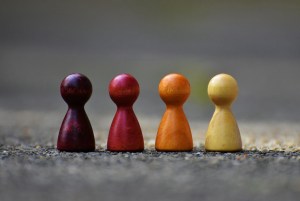
However, what’s more important to me at this stage in life, is nurturing my offline relationships and building a vibrant community. One who values me in return, where we can share and be there for one another.
For example, it baffles me to hear someone say, “Black Lives Matter” but then turn around and be ageist, ableist, xenophobic, homo/transphobic and misogynistic, (to anyone!) but, as if Black people don’t also exist in all of those ways. That’s not community, unless your community is bigotry.
In many post apocalyptic / dystopian books, shows or movies depict scenes where small groups of people band together to try to survive whatever has befallen them. There may be harder days ahead if we can’t hold this experiment called democracy together. We’ll all need communities to rely on.
Have you changed the way you use social media? In which ways do you build and maintain community offline? Share suggestions below!
READ / WATCH / LISTEN
- Forbes 50 Over 50: Meet The Women Winning Life’s Second Half
- Washington Post: At NABJ, Trump was both a missile and a mirror

 Kimfinite Possibilities
I did the same back in Jan 2023… deactivated my FB & IG accts. It was a breath of fresh air to be off the grid. I’ve since reactivated my accts BUT things are different. I log in maybe 2 times a day. I get in and get out. I do not scroll during work hours as a rule and my apps are always signed out. I sign in, check and then sign out. This time around I will try my best to utilize the space for true info (re: my private fraternal pages) and to congratulate fam/friends on family events…. that all. Thanks as always for your thought provoking posts…. they do not go unnoticed.
LikeLike